

Are Nasal Wing Reduction (Alar Reduction) Scars Noticeable? Recovery by Technique and How to Minimize Visibility

If you’re wondering, “I’m worried about the scar from alar reduction…” or “What differences are there between surgical techniques?”, this is a must-read. This time, we’ll detail the characteristics of different alar reduction techniques, how scars heal, and key points to avoid regret. We’ve also summarized how to manage your downtime for optimal scar healing. If you’re concerned about wide nostrils or large nasal openings, be sure to check this out.
How inconspicuous are the scars from alar base reduction? Does it vary by surgical technique?
Nostril Reduction Surgery (Alarplasty) is a procedure that removes skin from the inner or outer sides of the nostrils to narrow their width, making the nose appear smaller. The appropriate surgery varies depending on individual concerns, such as the spread of the nostrils or the overall size of the nose. The main surgical techniques are the internal approach and the external approach. Let’s take a closer look at these techniques and their characteristics.
Internal Approach|Incisions are made inside the nostrils, resulting in less noticeable scarring.
The internal approach for alar base reduction involves making an incision inside the nostril (at the base of the nasal cavity). This procedure aims to make the nostrils smaller and reduce the width of the alar base. Excess skin inside the nostril is excised and sutured, pulling the base of the alar base inward. Because the excision and suturing occur inside the nostril, this method is characterized by minimal visible scarring after surgery.
The internal approach is a procedure suitable for individuals experiencing the following nasal concerns.
・ Those concerned about the size of
their nostrils ・ Those concerned
about the width of their nostrils ・ Those who don’t want visible scars on the outside of their nose (or don’t want them to be noticeable)
External Approach|Incision at the base of the nostrils, where changes are easily visible
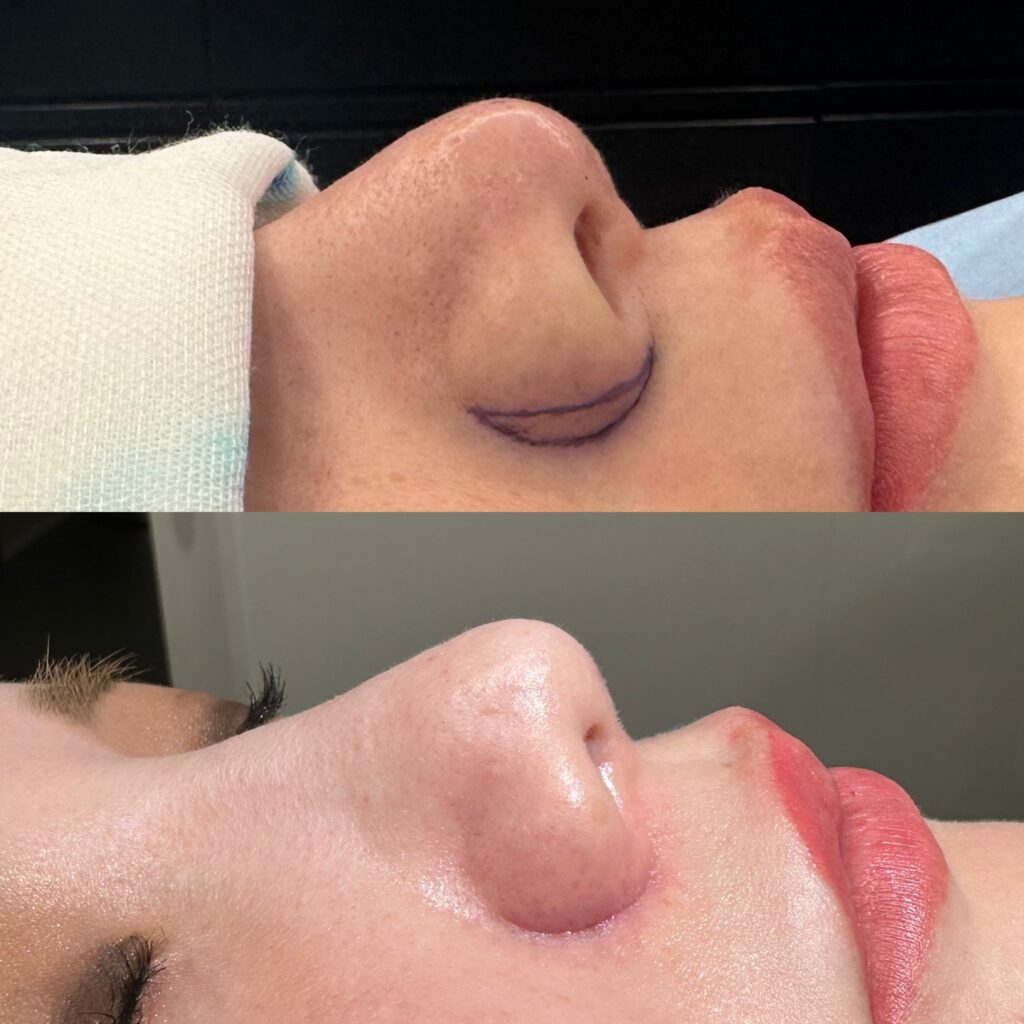
The lateral approach for alar reduction is a procedure that involves excising the outer part of the nostrils to reduce their volume and fullness. It corrects the puffiness of the alae that protrude outward beyond the base of the nostrils by removing excess skin. Compared to the medial approach, the resulting scar is more noticeable, so individuals with high sebum production should exercise caution.
The external approach is suitable for individuals with the following nasal concerns.
・ Those concerned about prominent nostrils, even if the nostril
openings themselves are not large ・ Those who wish to make the entire nostril area appear smaller
▷Nostril Reduction (Nasal Wing Reduction)
Changes in Nasal Wing Reduction Scarring Over Time
Nasal alar reduction surgery requires suture removal one week after the procedure. Regardless of whether the internal or external approach is used, symptoms such as swelling, pain, and bruising may occur, with downtime typically lasting about one to two weeks. It takes approximately six months for the scars to become less noticeable. We will monitor the condition of the scars and the progress of your downtime.
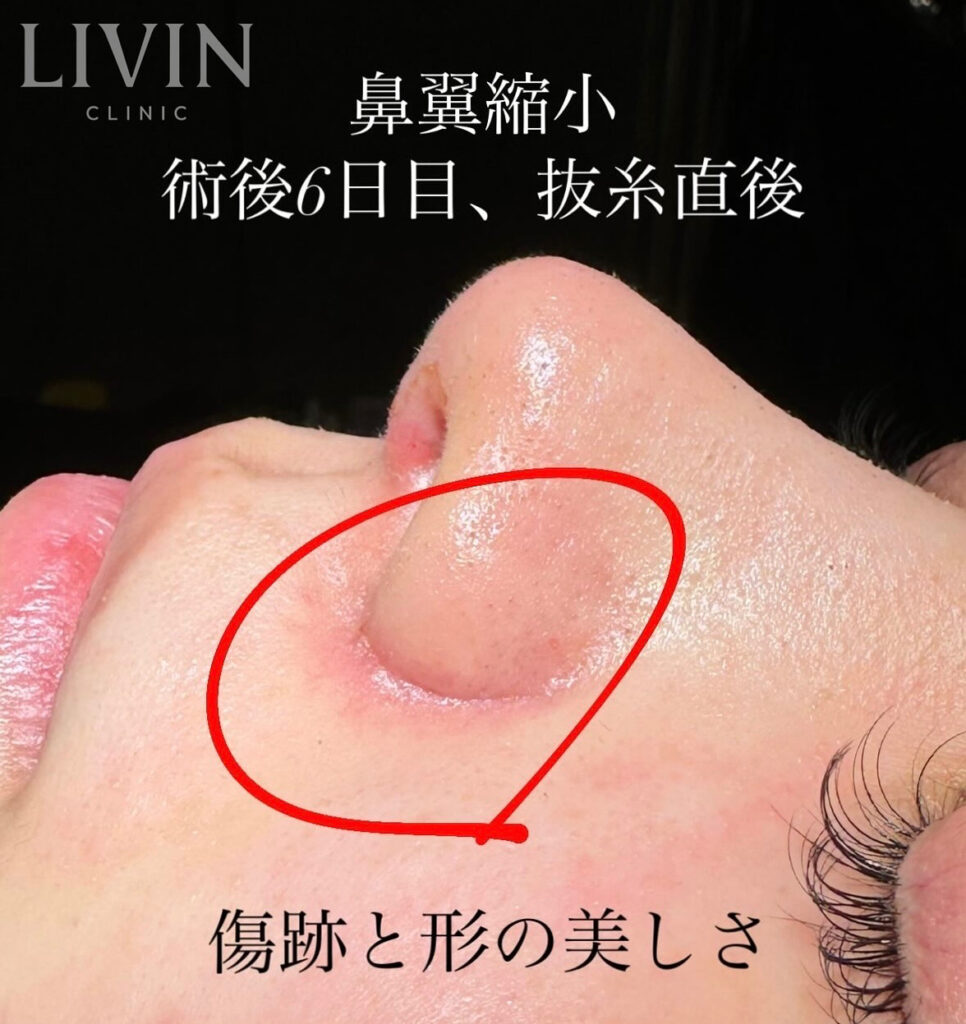
One week post-surgery (immediately after suture removal)
For the first week after surgery, swelling in the affected area and cheeks will still be present. In some cases, sensation in the tip of the nose may temporarily become dull, but this should resolve over time. The estimated downtime is approximately one week.
Immediately after suture removal, temporary redness may increase. Additionally, the area around the nose and cheeks may appear yellowish due to bruising, but this can be concealed with makeup. Typically, these effects will naturally subside within 1 to 2 weeks.
One month after surgery
For about one month after the procedure, the treated area may remain slightly red. Some swelling or puffiness may also persist. However, this can usually be concealed with makeup, so it’s highly unlikely that anyone will notice you’ve had alar reduction (nose wing reduction).
One month after surgery, you can resume activities like blowing your nose and nasal cleaning in daily life. The tightness around the nose when smiling will also resolve within about 1 to 2 months after surgery. Avoid touching the nose or sleeping on your stomach for 3 months after surgery, as these actions place strain on the nose.
3 to 6 months after surgery
By three months post-surgery, even with the lateral approach—which is known to leave more noticeable scars—the scarring becomes barely visible. Expect the final result to be nearly complete around three to six months after surgery. By this time, any tightness will have subsided, and you’ll begin to feel the softness of your nose. Restrictions on daily activities will be lifted, though you should continue to avoid any impact to the nose.
Key Points to Avoid Regret Over Nasal Wing Reduction Scars
Let’s look at key points to avoid regrets like “The scar is too noticeable…” after alar reduction surgery.
Choose a doctor who performs careful procedures with consideration for scarring
Nasal wing reduction surgery is a procedure within cosmetic medicine that demands both design expertise and technical skill. If scars on the nose, located at the center of the face, become noticeable or if the shape appears unnatural, there is a significant risk of disrupting the overall facial balance. Check the doctor’s qualifications and case history, and choose a clinic capable of performing meticulous procedures that carefully address scarring.
Find a clinic that will recommend the surgical procedure best suited for you
As mentioned earlier, there are several types of alar reduction procedures. During your consultation, be sure to ask for thorough recommendations on which procedure is best suited for you and what the post-operative results will look like.
Also, be sure to review the procedure flow, its advantages and disadvantages, and what your nose will look like afterward. Consider whether the clinic has a plastic surgeon or cosmetic surgeon who provides thorough explanations, and assess whether it is a trustworthy clinic.
Confirm the post-operative follow-up system

Postoperative follow-up systems vary significantly between clinics. For alar reduction surgery, postoperative care is also extremely important. Be sure to thoroughly confirm details regarding postoperative scar management, responses to swelling and pain, and the follow-up system before undergoing the procedure. For example, it is recommended to choose a clinic that offers a regular follow-up visit program, a postoperative guarantee system, and a 24-hour consultation service.
At LIVIN CLINIC in Shibuya, Tokyo, we prioritize thorough consultations and provide attentive post-operative aftercare. Before your procedure, we simulate the nose shape you envision and offer tailored recommendations. Post-operative consultations are available 24 hours a day via phone or our official LINE account.
If you’re thinking, “I want to thoroughly discuss the design during counseling,” or “I want to have the procedure at a clinic with comprehensive post-operative care,” please consult LIVIN CLINIC.
How to Spend Your Downtime for Clean Healing of Scars
When undergoing alar base reduction (nose wing reduction), you naturally want the resulting scar to be as inconspicuous and clean as possible. Here, we’ll share how to manage your downtime to ensure the scar heals beautifully.
Keep the affected area clean.
After treatment, you may feel discomfort around your nose and be tempted to touch it. However, it’s important to keep the affected area as clean as possible. To do this, try not to touch the scar (affected area). Touching the scar can delay healing and increase the risk of infection. Even if you feel itching or tightness around the scar, be careful not to touch it directly.
UV protection is essential
To ensure scars heal cleanly, UV protection is essential. After treatment, the affected area is extremely delicate. UV exposure can cause pigmentation issues, so thorough UV protection is crucial.
Use prescription drugs correctly
After alar base reduction (nose wing reduction) surgery, symptoms such as pain may occur. Therefore, it is common for the clinic to prescribe pain relievers and anti-inflammatory medications. Take the prescribed medications exactly as directed by your doctor and do not stop taking them on your own.
Refrain from activities that increase blood flow (long baths, drinking alcohol, exercise)
During the downtime period, please refrain from activities that increase blood flow, such as long baths, alcohol consumption, and strenuous exercise. Alcohol and intense physical activity improve blood circulation, which can worsen downtime symptoms like swelling and bruising. It is especially important to rest and take it easy for about one week after the procedure.
Q&A Regarding Nose Wing Reduction Scars

Finally, here are some frequently asked questions about scars after alar reduction surgery.
Can I undergo surgery even if I have a tendency to develop keloids?
Individuals prone to keloids tend to develop raised scars and experience prolonged redness at the affected site. However, undergoing treatment does not necessarily result in noticeable scarring for those with this predisposition. Consulting with a physician beforehand about your predisposition and selecting a procedure suited to your needs can help minimize the risk of scarring.
If a noticeable scar remains, is it possible to correct it?
Correction of noticeable scars left after alar base reduction (nose wing reduction) may be improved with laser treatment depending on the condition. However, raised, hardened scars are difficult to treat with laser alone, and excision may be necessary in some cases. For concerns
like indentations, scar revision suturing or TCA therapy may be used for adjustment. If you are concerned about your scar, first consult a doctor to discuss correction options tailored to your situation.
Why do scars become indented or appear white and shiny?
After undergoing alar reduction surgery, indentations or white sheen may appear on the scar. This occurs because surrounding pores may fuse together during the healing process, or because melanin production ceases, causing discoloration. White scars typically blend into your natural skin tone within one month to six months post-surgery. Monitoring the scar over time is generally acceptable, but if you find it bothersome, laser treatment is one option available.
If you want to achieve your ideal nose through alar reduction (nose wing reduction), find a trustworthy clinic.
To avoid regretting noticeable scarring after alar reduction surgery, choose a clinic with thorough consultations and a robust aftercare system. Clinics differ in their areas of expertise, surgical techniques, and guarantee systems. Start by scheduling a consultation to discuss your nasal concerns. Find a trusted plastic surgery or cosmetic surgery clinic that will propose a method suited to you.
▼Recommended articles for you after reading this piece
Nostril Reduction: Solve Your Nose Concerns. Detailed Explanation from Procedure Types to Downtime
For those who want a straighter nose bridge. The complete guide to achieving your ideal profile.
【Procedure Details】Nostril
Reduction (Alar Reduction) 【Estimated Duration
and Number of
Sessions】Typically 1 session ※May
vary depending on individual condition.
【Procedure
Time】Approximately
1 hour 【Cost】¥330,000 to ¥495,000 ※This procedure is self-pay (not covered by insurance).
【Face Washing,
Bathing】No nasal splint is required. Face washing is possible starting the next day.
【Makeup】 Sutures are removed after one week
. Makeup may be applied starting the day after suture removal.
【Risks & Side Effects (Possible Occurrences)
】Infection, wound dehiscence, impaired blood flow, swelling, bruising, nosebleeds, nasal congestion, columellar scarring, decreased sensation in the nasal tip or ears, nasal tilt, inability to elevate the nasal tip, asymmetry in nasal shape, hardening of the nasal tip, sensation of a rounded nasal tip.

Supervisor of this article
Director Yoshiaki Shingyochi
SHINGYOCHI Yoshiaki
Director of LIVIN CLINIC and a specialist in plastic and cosmetic surgery. After graduating from Juntendo University School of Medicine, he gained extensive experience as a department head and vice director before assuming his current position in 2025. He specializes in nose and eye area procedures, breast augmentation, and other surgeries, earning the trust of patients both domestically and internationally. Guided by the belief of “maximizing each patient's unique beauty,” he provides high-quality treatment through advanced techniques and meticulous procedures. Director of LIVIN CLINIC, Board-Certified Plastic Surgeon, Board-Certified Aesthetic Surgeon (JSAPS), Doctor of Medical Science, Adjunct Assistant Professor, Department of Plastic Surgery, Juntendo University.
Share this article
-

Share on X
-

Share on Facebook
-

Share on LINE
-
リンクをコピーしました