
Nostril Reduction: Solve Your Nose Concerns. A Comprehensive Guide from Procedure Types to Downtime
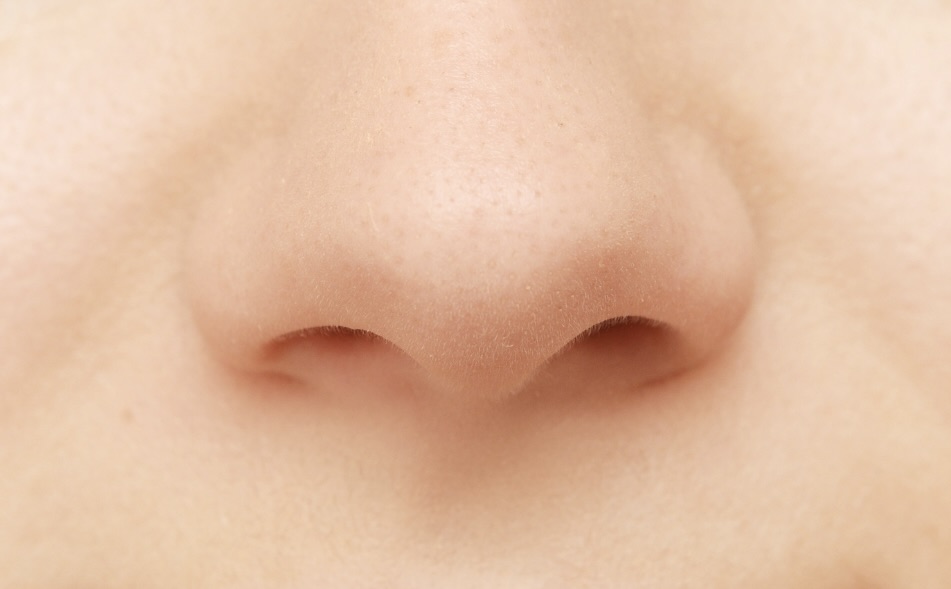
“Every time I look in the mirror, I’m bothered by how wide my nostrils look.” “I hate how my nostrils flare when I smile, so I end up covering my mouth.” The shape of your nose greatly affects your facial impression, so it’s natural to be concerned every time you look in the mirror.
Nostril Reduction Surgery refines excess skin to achieve a sleek and refined appearance.
This article clearly explains what alar reduction surgery entails, the types of procedures available, estimated costs, as well as associated risks and how to manage downtime.
Nostril Reduction Surgery|Addressing Your Nose Concerns
Nostril reduction surgery is a procedure that reshapes the size and form of the nostrils by removing skin and subcutaneous tissue.
By performing the appropriate treatment, we can resolve the following concerns:
- I'm concerned about my flared nostrils.
- My nose looks big because of my flared nostrils.
- When I laugh, my nostrils flare.
- Large, prominent nostrils
- I'm concerned about the shape of my nostrils.
- The size of the left and right nostrils is different.
Adjusting the sides of the nose and nostrils improves the overall facial balance, allowing you to achieve your ideal look—whether you want a more intelligent appearance or a more adorable one.
How to Achieve Your Ideal Nose? Types and Effects of Alar Reduction Surgery
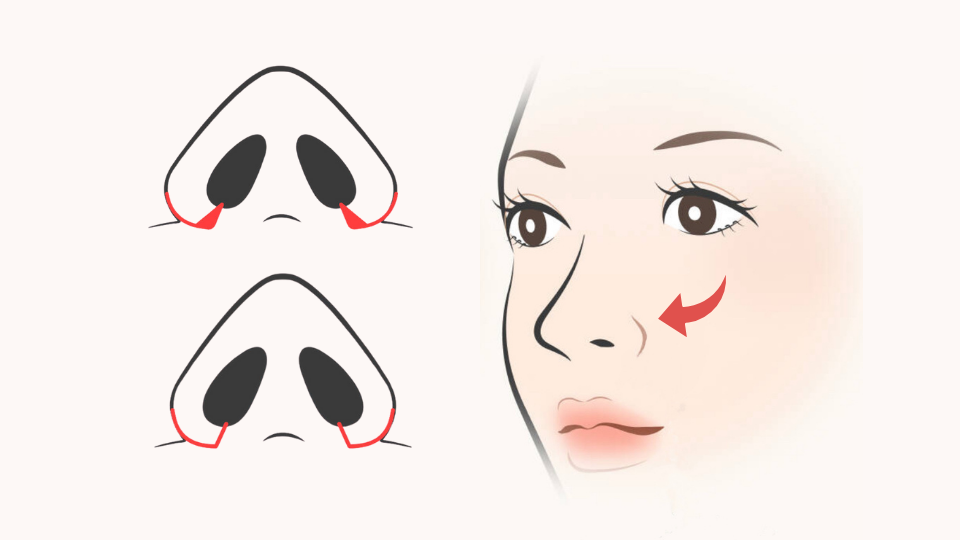
Internal method
This procedure involves making an incision inside the nostril, removing excess skin and subcutaneous tissue, and then suturing the area.
【Expected Effects】
You can expect effects such as narrowing the width of the nostrils to make them smaller, refining the shape of the nostrils to improve asymmetry, and slightly reducing the width of the alar base.
【Benefits】
The advantage is that incisions and sutures are made inside the nostrils, so scars do not appear on the outside and are less noticeable than with external methods.
【Disadvantages】
Disadvantages include the limited effectiveness in narrowing the width of the nostrils, making it difficult to improve the part of the nostrils that protrudes beyond the base of the nose.
【Recommended for People Like This】
This procedure is recommended for those who wish to improve the size or shape of their nostrils, reduce the prominence of their alar base, or prefer a treatment that minimizes visible scarring.
External approach
This procedure involves making an incision on the outer side of the nose, removing excess skin and subcutaneous tissue, and suturing the area.
【Expected Effects】
Reduce the volume of the sides of the nose to create a more refined appearance.
【Benefits】
It is also effective for the outer part of the nose that protrudes outward from the bridge, and its advantage is that it can narrow the width of the nostrils more than the internal method.
【Disadvantages】
Disadvantages include the difficulty in improving the size or shape of the nostrils and the risk of scarring.
The incision is made along the groove of the nostril to minimize scar visibility, but it takes about six months to a year for the scar to become virtually unnoticeable.
【Recommended for People Like This】
This treatment is recommended for those who wish to improve the appearance of flared nostrils or effectively reduce the volume of their nostrils.
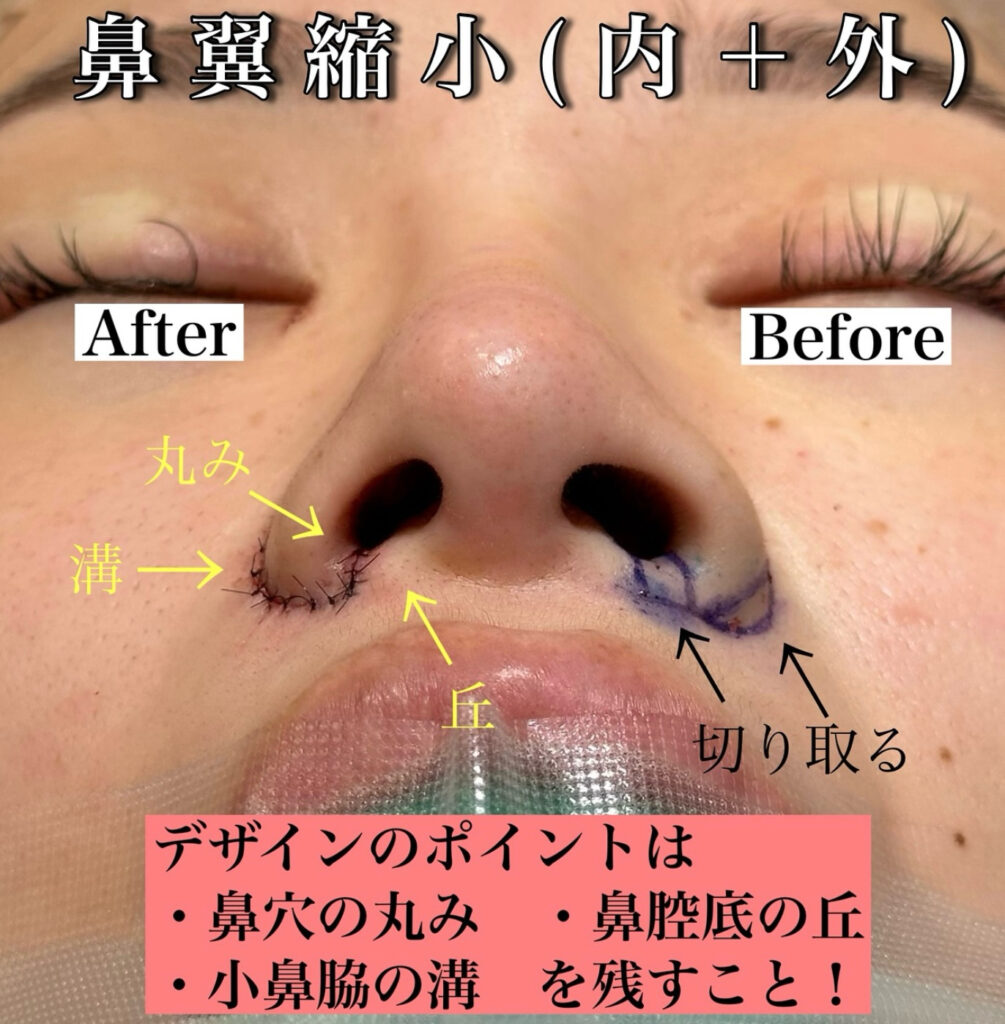
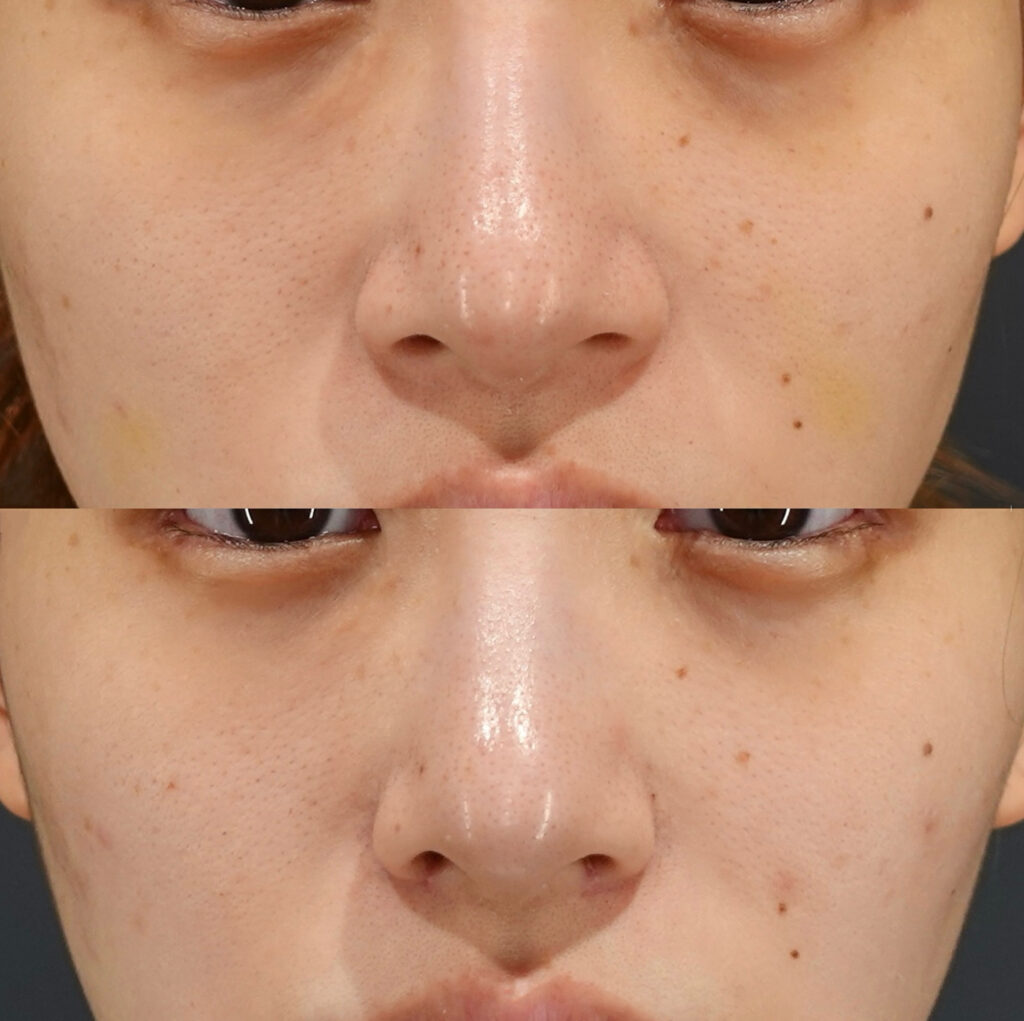
The following images show a case where both the inner and outer sides of the nose were treated for alar reduction.
Average Cost and Breakdown of Alar Reduction Surgery
Estimated Treatment Costs
The typical cost ranges from 300,000 to 400,000 yen.
This fee includes not only the treatment cost but also essential items such as anesthesia fees and post-operative care expenses (including consultation fees and medication costs).
The cost can vary significantly between clinics, and since anesthesia fees and consultation fees may not be included in the procedure cost, it is important to confirm the total cost beforehand.
Anesthesia fees and other miscellaneous expenses
In addition to the treatment fee, additional charges may apply for optional services.
The anesthesia fee included in the treatment cost is typically for local anesthesia. If you choose another type of anesthesia, an additional fee will apply.
【Anesthesia Other Than Local Anesthesia and Fees】
Anesthesia fees vary by clinic, but nitrous oxide anesthesia costs around ¥5,000 to ¥10,000, while intravenous anesthesia costs around ¥50,000 to ¥100,000.
We recommend confirming during your consultation what type of anesthesia will be used and how much will be required for miscellaneous expenses.
【When Using KO Light】
When using KO Light (medical-grade LED), which is expected to reduce downtime, each session costs approximately 3,000 to 6,000 yen.
KO Light (Medical LED) Case Studies Here
What You Should Know About Downtime and Risks Before Undergoing Alarplasty
Duration and symptoms of downtime
Generally, 1 to 2 weeks of downtime is required, and pain and heat sensation occur after the anesthesia wears off post-surgery.
It may take about a week for the pain and heat sensation to subside, but the prescribed pain medication can manage it.
Swelling and bruising will be noticeable for the first week after surgery, but they will gradually subside and become less noticeable after about two weeks.
Since the affected area can be covered with a mask, we recommend wearing a mask during the downtime.
【When Sutures Can Be Removed and Makeup Applied】
Sutures are removed on the 7th day after surgery, and makeup can be applied starting the day after that.
Even after the stitches are removed, some redness may remain on the scar, but you can conceal it with makeup to make it less noticeable.
After the procedure, you may experience pain and swelling, so we recommend ensuring you have adequate time for recovery.
Postoperative Course and Care Methods
You can wash your face starting the next day.
Showers are available starting the day of arrival, and baths are available starting the following day.
【Postoperative Precautions】
As your body warms up, blood circulation improves, which may cause swelling and redness to intensify. Therefore, we recommend taking showers or baths quickly using lukewarm water.
Avoid strenuous exercise and alcohol consumption for one week after surgery, as these activities may prolong your recovery time.
Makeup may be applied starting the day after suture removal, which occurs on the 7th day after surgery.
After surgery, it is important to avoid stimulating the affected area, so please refrain from pressing or rubbing it forcefully.
When performing moisturizing care or UV protection, please handle gently and carefully.
When going to bed, avoid sleeping on your stomach and use a pillow to elevate your head slightly.
Risks and Side Effects
Asymmetry may appear in the sides of the nose or nostrils, and there is a risk of an unnatural finish.
To prevent this, it is important to perform the treatment with a design that is not overly demanding.
By preserving the outer groove of the nostrils, the rounded shape of the nostril openings, and the lower portion of the nasal cavity (the nasal floor), it is possible to achieve a natural finish and well-balanced nostrils.
Additionally, caution is necessary as there is a risk of infection or scarring.
Please undergo treatment only after fully understanding the risks and potential side effects. We recommend choosing a clinic with thorough aftercare in case of any unforeseen issues.
Points to Note to Avoid Failure
Choosing a design that suits you is essential for a natural finish.
Choose an experienced physician who will provide the optimal proposal based on prior simulations.
Whether they sincerely address your questions and concerns, and the thoroughness of their counseling, are also important.
Additionally, post-operative care directly impacts recovery time and final results. Choose a clinic you can trust for follow-up care, one where you can adhere to the doctor’s instructions and consult immediately if any issues arise.
At LIVIN CLINIC, we value “natural beauty” that harmonizes the entire face, not just reducing the size of the nostrils.
Our experienced physicians will carefully listen to your ideal image and propose the optimal surgical approach to minimize scar visibility. We provide sincere aftercare following your procedure, so please share your concerns with us first.
Postoperative Changes and Effectiveness of Alar Reduction Surgery
Changes Immediately After Surgery
After the procedure, symptoms such as pain, heat sensation, swelling, redness, and bruising may appear at the affected site.
These symptoms typically peak around 2 to 3 days after surgery and gradually subside.
Pain and heat will subside in about a week, while swelling, redness, and bruising will fade in about two weeks.
The stitches will remain in place until they are removed on the 7th day after surgery, so the scar will be noticeable during this time. However, it can be concealed with a mask.
Redness and swelling may remain at the incision site after suture removal, but makeup can be applied starting the day after suture removal, helping to minimize the appearance of the scar.
You may feel your skin tighten when you smile, but it will gradually ease up.
The period until it completely settles down
Individual results may vary, but swelling and bruising typically subside significantly around two weeks after surgery, allowing you to conceal them with makeup without needing a mask.
Additionally, about one month after surgery, you will feel less skin tightness and no longer experience discomfort when smiling.
The symptoms gradually subside over time, and the swelling completely resolves after about six months.
The redness of the scar will gradually fade to pink over time and blend into the natural skin tone within about three months after surgery.
About six months after surgery, the scar will fade into a thin white line. With the internal approach, the scar is hidden inside the nostril; with the external approach, it follows the crease of the lower nose. In both cases, the scar becomes virtually invisible about six months to a year after surgery.
Effectiveness Duration
Since excess skin and subcutaneous tissue on the sides of the nose are removed, it is highly unlikely that the preoperative condition will be restored.
The results are generally semi-permanent. However, the nostrils may enlarge or change shape due to weight gain, pelvic misalignment, or aging, so you may notice changes in your nostrils caused by these factors.
To maintain your ideal nose shape, it’s important to pay attention to daily habits like weight management and proper posture, as well as diligently performing skincare and anti-aging routines.

Supervisor of this article
Director Yoshiaki Shingyochi
SHINGYOCHI Yoshiaki
Director of LIVIN CLINIC and a specialist in plastic and cosmetic surgery. After graduating from Juntendo University School of Medicine, he gained extensive experience as a department head and vice director before assuming his current position in 2025. He specializes in nose and eye area procedures, breast augmentation, and other surgeries, earning the trust of patients both domestically and internationally. Guided by the belief of “maximizing each patient's unique beauty,” he provides high-quality treatment through advanced techniques and meticulous procedures. Director of LIVIN CLINIC, Board-Certified Plastic Surgeon, Board-Certified Aesthetic Surgeon (JSAPS), Doctor of Medical Science, Adjunct Assistant Professor, Department of Plastic Surgery, Juntendo University.
Share this article
-

Share on X
-

Share on Facebook
-

Share on LINE
-
リンクをコピーしました