

For those troubled by failed double eyelid surgery or ham-shaped eyes. A thorough explanation of ham-shaped eye correction procedures.
Have you ever felt that even after getting double eyelid surgery, your eyelids look puffy or the double crease is too wide, making your lower eyelids droop?
This condition is commonly referred to as “ham eyes.” While some individuals are born with it, it can also be a concern following double eyelid surgery (due to factors such as the surgeon’s lack of skill or design errors).
This article provides a clear explanation of hamster eye correction, covering everything from self-care methods you can do at home to cosmetic surgery cases for fundamental treatment, along with typical price ranges.
Hamster eyes
Ham-eye refers to the puffy, swollen appearance of the eye area where the lash line appears swollen and rounded beneath the double eyelid line after double eyelid surgery.
It is said that the term “ham eyes” originated from comparing the plump, rounded sections of boneless ham tied with string to the appearance of human eyes.
Also known as the “sausage eye,” it tends to give an impression of puffiness and sleepiness, or an unnatural appearance around the eyes.
However, it is often the case that even when suspected to be ham eye, the actual examination reveals it was not ham eye.
Swelling during the post-operative downtime is a natural symptom and typically subsides over time. If puffiness around the eyes persists even after the swelling has gone down, it could indicate ham eyes.
If you suspect you might have droopy eyelids, you should first visit a clinic. After an examination, a doctor will determine whether corrective treatment is appropriate.
-術前のお写真-2-1024x819.jpeg)
The main causes of hamster eyes
Ham eyes are often cited as a failure case after double eyelid surgery. The following factors may contribute to the development of ham eyes:
Double eyelid surgery methods such as full incision and suture-based techniques
When performing double eyelid surgery using the full incision method, it is said that designing the double eyelid crease too wide in a shape that does not match the patient’s bone structure or eyelid condition can result in a “ham-shaped eye.”
Generally speaking, a narrower crease created during double eyelid surgery carries a lower risk of developing a “ham-like” appearance.
Additionally, if too much skin tissue is removed during the incision, the skin may be pulled taut, causing the double eyelid line to become deeply etched and appear like a ham-shaped eye.
With the buried suture method, tying the thread too tightly can cause the skin beneath the double eyelid line to bulge unnaturally, resulting in a ham-like appearance.
Insufficient medical skills or design errors
Double eyelids that are too wide, mismatched to the bone structure or eyelid shape, or caused by overly tight sutures in the buried suture method are the result of the surgeon’s lack of skill or design errors.
Since each person’s eyelid width and skin thickness differ, choosing a clinic with a skilled doctor who can create a customized design reduces the risk of ham-shaped eyes.
Swelling during post-operative downtime
Both incision and buried suture methods cause eyelid swelling and puffiness as part of the immediate post-operative downtime, so the eyes may temporarily appear droopy after surgery.
As a guideline for determining whether you have ham eyes, swelling typically subsides about one week after buried suture surgery and 2-3 weeks after incision surgery. If your eyelids remain unnaturally swollen more than one month after surgery, suspect ham eyes.
Additionally, excessive alcohol consumption or salt intake during downtime can increase susceptibility to swelling, so caution is advised.
How to Tell if You Have Hamster Eyes: Self-Check Methods
The term “ham eyes” is not an official medical term but rather a coined expression that has spread among the general public. Consequently, some people mistakenly believe they have “ham eyes.”
Here’s how to tell if it’s ham-eyed:
- The area below the double line appears unnaturally swollen.
- The lash line is covered and hidden by skin.
- Even after more than a month since my double eyelid surgery, the unnatural appearance and puffiness of my eyelids have not subsided.
In such a state, it is highly likely to be ham-eyed.
【Cases Easily Mistaken for Ham Eye Syndrome】
Incidentally, a common case often mistaken for ham eyes is “swelling after double eyelid surgery.”
After surgery, anyone may experience a “puffy eye” appearance during the recovery period. Therefore, until the swelling subsides after double eyelid surgery, refrain from assuming it’s a “puffy eye” and instead focus on resting the area and monitoring the progress.
Additionally, individuals accustomed to using eyelid tape or glue to create double eyelids may find that after undergoing double eyelid surgery, the crease feels overly pronounced, leading them to perceive it as “ham eyes.”
It usually takes time to get used to things, so let’s just wait and see for a while.
DIY Hamster Eye Care Methods
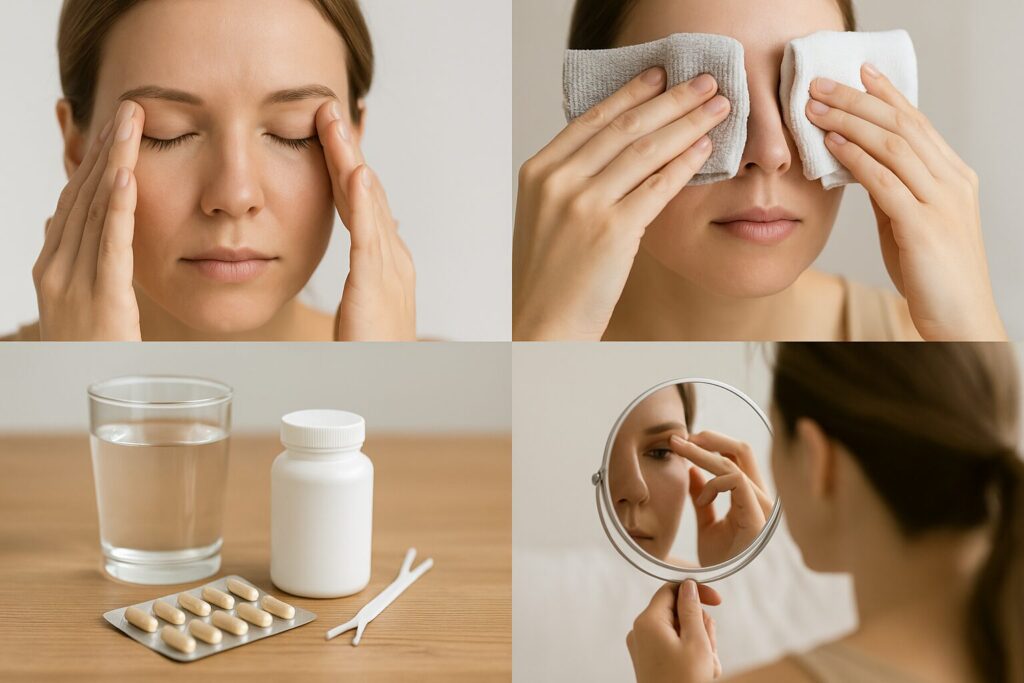
In some cases, puffy eyes can be improved through self-care.
However, self-care must be approached with caution, as incorrect methods can backfire or strain the skin, potentially triggering problems.
We’ll cover self-care methods that are not recommended for hamster eyes, as well as self-care methods that may help reduce them.
Is Massage Counterproductive? Care That’s Bad for Puffy Eyes
Some people may think that massaging the eyelids can reduce puffiness, but self-massage can actually be counterproductive and requires caution. Particularly harmful care involves rubbing or applying strong pressure with your hands or fingers.
The skin around the eyelids is very thin, so frequent massage or strong stimulation can cause the skin to stretch and accelerate sagging. It also places strain on the muscles and tissues around the eyes, such as the orbicularis oculi muscle, potentially causing damage.
Additionally, prolonged pressure may actually worsen blood flow, so it’s best to avoid self-care methods like pressing or rubbing.
Methods for Improving Swelling Through Care
Reducing puffiness through improved swelling can help achieve a more refreshed appearance.
Self-care doesn’t bring dramatic change overnight, but by making it a daily habit, you’ll gradually start to feel the difference.
Alternate between warming and cooling
Wet a towel and warm it in the microwave, or soak it in hot water, wring it out, and gently place it over your eyes.
Next, wrap a chilled towel or ice pack in thin gauze or a clean towel and place it on your eyelids for 1 to 2 minutes.
Warming improves blood circulation, while cooling provides a tightening effect.
When you’re short on time in the morning, washing your face alternately with warm and cold water is also effective.
Limit your intake of salt and alcohol
Excessive salt intake and alcohol can lead to swelling.
Consuming too much salt causes the body to retain water in an effort to lower the salt concentration in the blood, which can lead to swelling.
Eating out tends to lead to excessive salt intake, and prepared foods often contain a lot of processed salt, so try to cook at home as much as possible.
Using salt that contains natural minerals such as potassium and magnesium helps reduce water retention.
Alcohol dilates blood vessels, temporarily improving circulation. It also has a diuretic effect, making it easy to become dehydrated without realizing it.
Therefore, it can cause thirst, and excessive fluid intake may lead to water retention in the body, potentially resulting in morning puffiness, so caution is necessary.
Limit your alcohol intake per session and take liver rest days to reduce swelling.
Prevent swelling by maintaining proper sleeping posture
To prevent swelling, sleeping on your back is recommended as it minimizes blood flow obstruction and reduces pressure on the limbs.
Sleeping on your stomach or side is not recommended for preventing swelling, as it tends to concentrate body weight on specific areas and can easily impede blood flow.
Elevating your feet slightly with cushions or pillows helps excess fluid and waste products accumulated in the lower body return more easily to the heart. This improves blood and lymphatic flow, making it less prone to swelling.
Additionally, lack of sleep can disrupt hormone balance and slow metabolism, so aiming for 6 to 8 hours of sleep can help prevent swelling.
For Those Seeking a Fundamental Solution|Ham Eye Correction Surgery in Cosmetic Plastic Surgery
If you’re concerned about ham-shaped eyes even six months after double eyelid surgery, and self-care doesn’t improve the symptoms, those seeking a fundamental solution can undergo corrective cosmetic surgery.
Below, we will explain the appropriate timing for correcting ham eyes, methods for corrective surgery, how to choose a reliable cosmetic surgeon, and key points for selecting a doctor.
When can I get my hamstrings corrected? The appropriate time for correction
Double eyelid surgery often raises concerns after procedures like incision or suture methods, but in some cases, these concerns fade once the recovery period passes.
Therefore, we should observe the progress for at least one month after surgery.
The timing for touch-ups varies depending on the surgical technique and the condition of the eyelids. For the suture method, it is generally around one month after surgery, while for the incision method, it is around six months after surgery.
This is because the condition for revision surgery is that the postoperative wound has healed and the swelling has sufficiently subsided.
Types and Methods of Revision Surgery
When considering revision surgery for double eyelid surgery complications, the following methods are available. It is necessary to select the method best suited to your concerns and symptoms.
Revision surgery via re-incision
Revision surgery is a procedure selected for cases where a hamstring-like appearance developed after initial surgery, such as when the double eyelid crease is deeply indented.
We will reopen the eyelid incision to adjust the width of the double eyelid and reconstruct a natural double eyelid.
Incidentally, if eyelid drooping is severe, excess skin may be removed; if there is a significant amount of fat, an appropriate amount may also be removed.
Following that, the wound is sutured with ultra-fine thread. Suture removal is typically performed 5 to 7 days later.
Downtime tends to be longer than after the first surgery, and it may take 3 to 6 months to achieve a natural result.
Removal of sutures after buried suture method
Correction for double eyelid surgery that resulted in droopy eyes using the buried suture method involves first removing the previous buried sutures.
After that, we adjust the double eyelid line and perform re-burial. If the double eyelid appears uneven due to fat or skin thickness, we may suggest switching to a full incision or partial incision procedure after suture removal.
Downtime may involve slightly more swelling than the first procedure, but it typically subsides within about a week. It generally takes approximately 1 to 3 months for the double eyelid line to stabilize and achieve a natural finish.
Eyelid skin excision
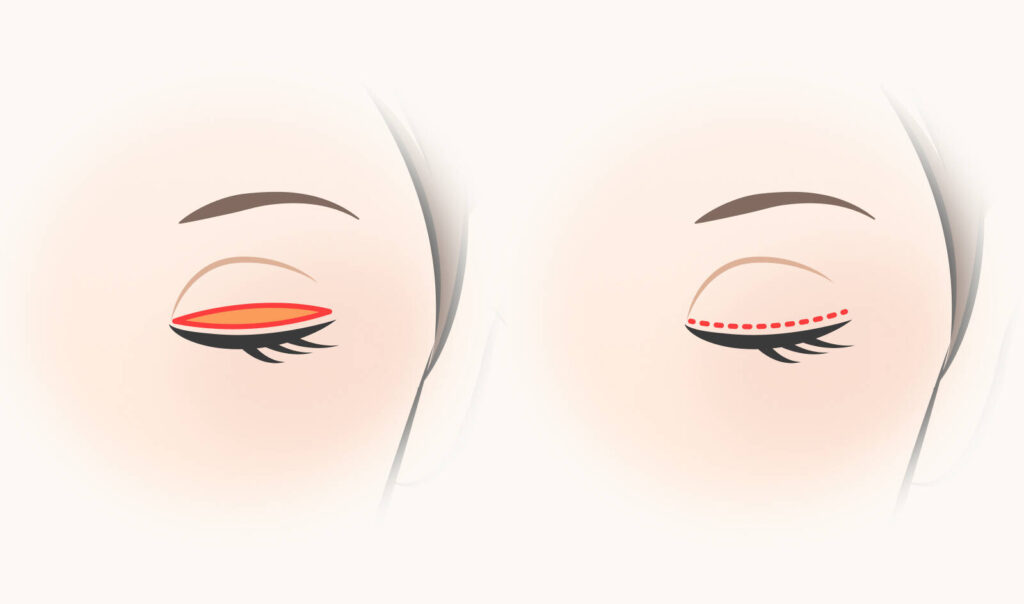
Upper eyelid skin excision is a surgical procedure that removes sagging without altering the double eyelid width.
Recommended for those with drooping eyelids or hidden lash lines, such as cases where the eyelid appears “ham-shaped” after buried suture or incision procedures.
This procedure features minimal downtime and involves excising and suturing the skin at the lash line and the orbicularis oculi muscle, resulting in less noticeable scarring.
Suture removal is generally performed on the 5th to 7th day.
The scar will become less noticeable within a few weeks.
It typically takes about 1 to 2 weeks for the swelling to subside and achieve a natural result.
Key Points for Choosing a Reliable Plastic Surgeon and Clinic
If you’re concerned that your double eyelid surgery may have failed or wish to correct post-operative ham-shaped eyes, one option is to first consult the clinic where you had the surgery.
In some cases, the warranty may still be valid.
On the other hand, revision surgery after double eyelid surgery requires the surgeon’s design skills and technical expertise. Consulting with a clinic that has extensive experience in revisions may help you achieve your ideal look.
Key points to keep in mind when choosing a clinic or doctor are as follows:
Do you have extensive experience with revision surgery?
Generally, it is said that revision surgery is more difficult than the initial double eyelid surgery.
To achieve a natural finish without creating a “ham-like” appearance, it’s crucial to determine the design based on the individual’s eye shape and skin thickness. This requires not only the doctor’s technical skill but also their design expertise.
Therefore, thoroughly researching beforehand—such as checking clinics that specialize in revision surgery, those with extensive experience, those with many case photos, and online reviews—can help reduce the risk of complications.
Is the attending physician’s counseling thorough?
Double eyelid surgery can lead to regret if you don’t undergo thorough counseling beforehand.
For example, even if a client requests a wider double eyelid design to achieve a more foreign-looking appearance, the result will appear unnatural if it doesn’t suit the condition of their eyelids or the shape of their eyes.
It is also said that the wider the double eyelid crease, the more likely one is to develop droopy eyelids.
Therefore, when aiming for your ideal double eyelid width, it’s crucial to discuss your desired outcome with your doctor—whether you’re willing to take risks for your preferred width or prefer a natural-looking design that suits you.
- During counseling, they thoroughly listen to your desired design while also explaining the risks involved.
- They'll suggest a double eyelid width that suits you for a natural finish.
- Before surgery, they'll use a mirror to simulate the double eyelid width for you.
Choosing such clinics can reduce the risk of regretting your decision after surgery.
Is the post-operative warranty and aftercare comprehensive?
You can feel confident undergoing treatment at a clinic that thoroughly monitors you even after surgery—one that carefully explains the guarantees in case of any post-operative complications and the methods for post-operative aftercare.
- Will I receive prompt medical attention if complications arise after surgery?
- Can I get a prescription for medication if needed?
- Is it possible to make further revisions?
Postoperative guarantees and aftercare vary by clinic, so be sure to confirm these details before undergoing surgery.
Cases of Hamster Eye Correction and Price Range
Here are actual cases of hamstring correction and typical pricing.
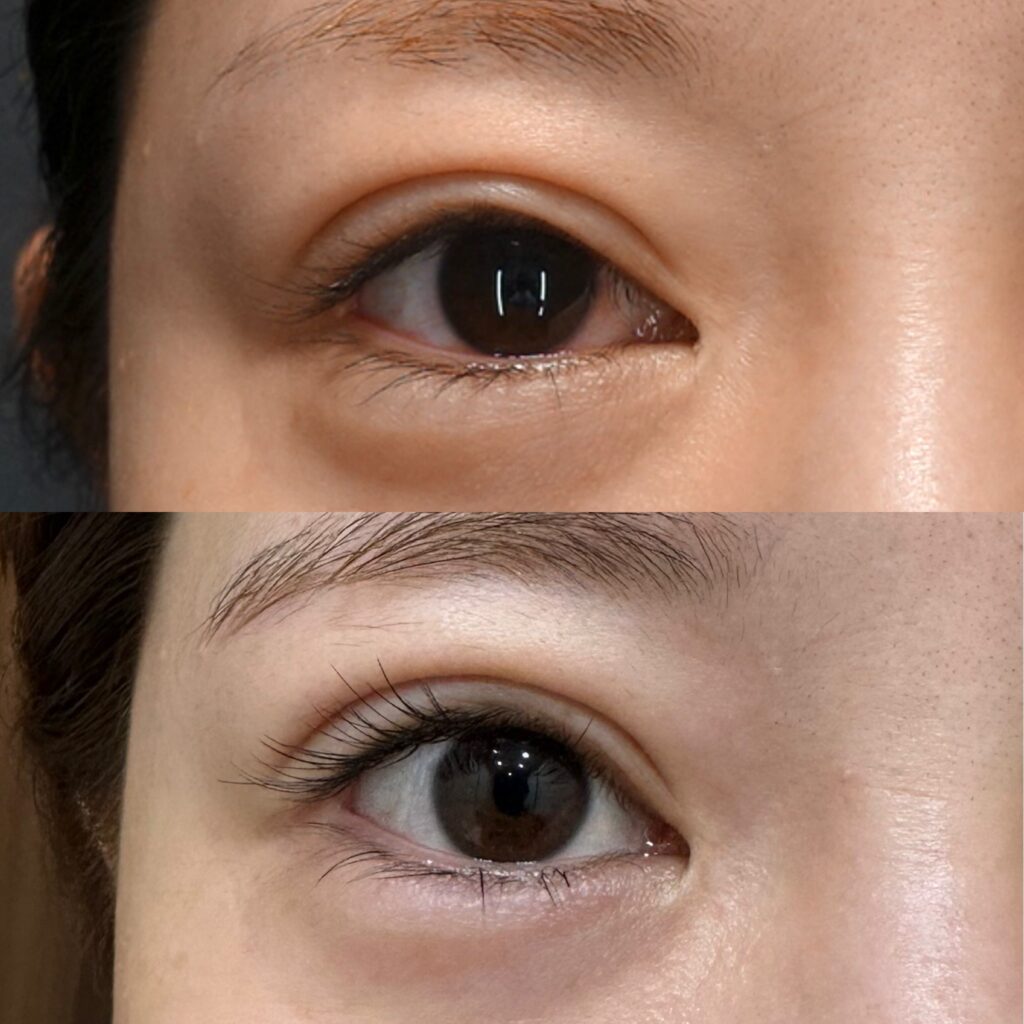
Procedure Cost】¥330,000 and up
View more cases of ham-eye correction (upper eyelid skin excision)
Estimated Fees and Additional Charges
The cost of a ham-eye correction varies depending on the surgical method (superior blepharoplasty, full blepharoplasty, or suture-based correction) and whether fat removal or skin excision is performed.
Additional fees may apply for revisions made at other clinics, so it’s best to confirm beforehand.
As a general price range, simple procedures cost around ¥200,000, upper eyelid incisions cost around ¥300,000 to ¥400,000, and full incisions or more complex procedures can cost between ¥500,000 and ¥800,000.
Some clinics are recruiting monitors, so if you want to keep costs down, check with them beforehand.
In any case, it’s important to get an estimate during the consultation to confirm the cost and proceed with the treatment only after you’re satisfied.
Answers to Frequently Asked Questions Regarding Ham Eye Correction
Won’t the hamster eye correction make it worse?
While hamstring revision surgery offers the potential for symptom improvement, the risk of further deterioration is not zero.
Even after making corrections, the results may appear unnatural. Risks include hamstring eyes not being fully improved, or excessive removal of skin and fat causing the eye area to appear sunken.
Therefore, we recommend consulting with a trusted physician skilled in corrective procedures before undergoing treatment.
Can you correct surgeries performed at other hospitals?
LLIVIN CLINIC can also perform revisions for buried suture or incision surgeries performed at other clinics.
Our dual board-certified specialists in plastic surgery and cosmetic dermatology achieve both natural, elegant results and minimized downtime. We do not charge additional fees for revisions from other clinics.
How long is the downtime for hamstring correction?
The downtime for hamstring correction varies depending on the surgical technique, but when removing and reinserting buried sutures, it typically takes about 1 to 3 months for a natural result to be achieved.
Upper eyelid skin excision has relatively short downtime, with a natural result typically achieved within 1 to 2 weeks.
Revision surgery often involves a longer recovery period than the initial procedure, and it may take 3 to 6 months for swelling to subside and achieve a natural appearance.
If you want to eliminate droopy eyelids and achieve your ideal double eyelids, please consult LIVIN CLINIC.
Swollen eyelids after double eyelid surgery can cause concerns like “My eyes look puffy despite getting surgery,” due to persistent swelling or an unnatural appearance.
If you’re troubled by puffy eyes, the first step toward a solution is to correctly identify the cause and choose a method that suits you.
At LIVIN CLINIC, we carefully diagnose each patient’s eyelid condition and perform corrective procedures, including revisions from other clinics.
Drawing on extensive experience with corrective procedures, we help you regain your ideal eye area by reconstructing natural and beautiful lines.
If you’re concerned about hamster eyes, please feel free to come in for a consultation.
Dr. Yoshiaki Shinyouna, our director and dual board-certified specialist in plastic and cosmetic surgery, will propose the most appropriate approach and provide support to ensure you can undergo surgery with peace of mind.

Supervisor of this article
Director Yoshiaki Shingyochi
SHINGYOCHI Yoshiaki
Director of LIVIN CLINIC and a specialist in plastic and cosmetic surgery. After graduating from Juntendo University School of Medicine, he gained extensive experience as a department head and vice director before assuming his current position in 2025. He specializes in nose and eye area procedures, breast augmentation, and other surgeries, earning the trust of patients both domestically and internationally. Guided by the belief of “maximizing each patient's unique beauty,” he provides high-quality treatment through advanced techniques and meticulous procedures. Director of LIVIN CLINIC, Board-Certified Plastic Surgeon, Board-Certified Aesthetic Surgeon (JSAPS), Doctor of Medical Science, Adjunct Assistant Professor, Department of Plastic Surgery, Juntendo University.
Share this article
-

Share on X
-

Share on Facebook
-

Share on LINE
-
リンクをコピーしました