
Is there a way to thin the skin on the nose? Causes of thick skin and massage/medical options

Many people want to know how to thin the skin on their nose.
This time, we’ll explain the causes of thick nasal skin and massage techniques to thin it.
Additionally, we introduce procedures in cosmetic medicine that fundamentally thin the skin of the nose. We’ve also summarized key points for choosing a clinic when undergoing rhinoplasty.
“How can I fix a bulbous nose?” “Can I thin my nose skin on my own?” If you’re wondering about these concerns, please read to the end and use this information to compare your options for thinning your nose.
What causes a nose to appear thick?
The bones, fat, and skin that form the nose.
The shape and placement of the nose can make it appear thicker. Let’s take a closer look.
The cartilage at the tip of the nose is significantly flared.
The majority of the front part of the nose is made up of the alar cartilage.
When the alar cartilage is flared outward on both sides, it can contribute to the appearance of a bulbous nose.
A large amount of fat under the skin (subcutaneous fat)
When there is a lot of subcutaneous fat on the tip of the nose, it gives the impression of a thick, swollen nose.
The shape of the skin above the alar cartilage becomes blurred due to the thickness of the fat.
Temporary effects due to swelling or poor blood circulation
Swelling can sometimes make the nose appear thicker. This is due to waste products accumulating in the nose. Be mindful of lifestyle habits, such as excessive salt or alcohol intake.
Thickness due to genetic influence
Due to genetic factors, many people are born with a naturally voluminous nose. The shape of the nose varies from person to person, influenced by bone structure, fat distribution, and muscle development. It is believed that genetic elements inherited from parents and grandparents also play a role.
Skin thickness due to stimulation
Human skin may thicken due to stress from irritation.
Habits like picking or rubbing your nose may be promoting thickening of the skin.
Decrease in bone density due to aging
As we age, bone density decreases, and facial bones may become thinner.
As the facial bones become thinner and spread out, the nasal tissue is pulled outward, causing the nose to widen. Additionally, the skin loses its elasticity with age.
The skin around the nose also sags and droops due to a lack of firmness. This may make the area appear more voluminous than before.
How to Thin Your Nose Skin Naturally? 3 Ways to Make It Look Slimmer
So, is there a way to thin the skin on your nose on your own? Here, we’ll explain three methods to make the skin on your nose appear thinner.
1. Create a sculpted nose bridge with makeup techniques
There is a makeup technique that uses nose shadow (shading powder) and highlighter to make the nose appear more three-dimensional.
The key point is “not to draw the bridge of the nose as a single line, but to place shadows and highlights as dots.”
Nose shadow (creating shadow)
- Covering the roundness of the nose wings:
- Apply shadow along the edge of the nostrils, imagining you're shaving off the rounded contour.
- Clear Your Nose:
- Applying a **V-shaped** shadow to the tip of the nose creates a sharp impression.
Highlight (to add height)
- The bridge of the nose (between the inner corners of the eyes):
- Apply it precisely to the hollow area between your eyes using your fingertip or a brush.
- Nose tip:
- Place it small and round on the tip.
Tips for a more natural finish
“Don’t connect them with a single line” If you connect the highlight from the brow bone to the tip of the nose, it will unnaturally emphasize the nose.
By placing dots at the “base” and “tip” as shown above, you can create the illusion of an ideal nose shape with a sense of openness.
2. Massage to Care for Swelling Around the Nose
If swelling is the cause of your nose appearing thick, massage is one option.
Use massage to stimulate lymph flow and promote the removal of waste products accumulated at the tip of the nose.
Perform the self-massage to drain nasal lymph nodes using the following steps:
- Press the indented area beside the nostrils with your finger for 3 to 5 seconds.
- Massage the sides of your nostrils up and down to loosen them.
- Gently pinch the sides of your nostrils and stroke upward along the bridge of your nose to the inner corners of your eyebrows: Move your fingers softly as if
flushing out waste buildup in the nostrils. - Press the inner corner of your eye with your finger for 3 to 5 seconds.
Massage can help reduce swelling, but there are limits to how much it can thin the skin on the nose.
Additionally, since friction from massage can potentially cause the skin to thicken, use creams or oils to reduce irritation.
3. Use a nose clip
A nose clip is a beauty tool that reshapes the nose by pinching it.
It can lift tissues such as the skin, creating the effect of making the nose appear slimmer and higher.
That said, the effects of a nose clip are temporary. Once you stop using it, the situation usually reverts back to how it was before.
Additionally, prolonged use may cause deformation of the cartilage, potentially widening the nostrils. Since this could have the opposite effect, it is generally not recommended.
A treatment to fundamentally improve the thickness of the nose through aesthetic medicine
While there are self-care methods to make the skin on your nose appear thinner, the reality is that they have limitations—either they don’t show immediate visible results or the effects are only temporary.
Therefore, we would like to consider treatments in aesthetic medicine. Here, we introduce a treatment method that uses the power of aesthetic medicine to thin the skin of the nose from the root.
Nose Tip Reshaping & Reduction|Shaping the cartilage causing a bulbous nose for a sharper tip
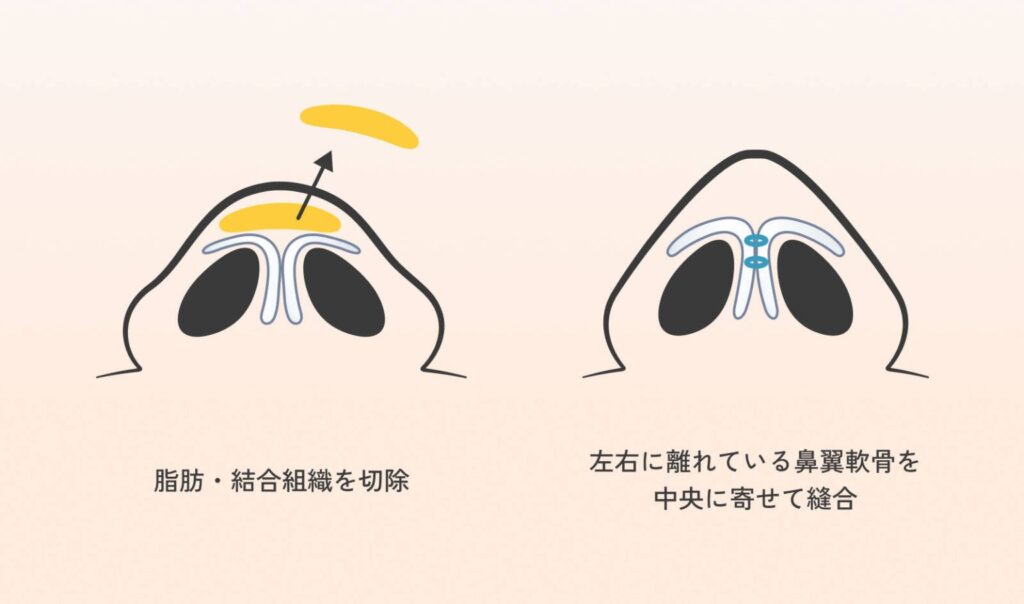
Nasal tip reshaping and reduction is a procedure that adjusts the shape of the nasal tip. By refining the nasal tip to be slimmer and higher, it can improve the roundness of the nose.
Nasal tip surgery typically involves suturing the widely spaced alar cartilages together or grafting auricular cartilage from the ear to the nasal tip to increase its height.
However, rhinoplasty may experience some degree of regression over time.
LIVIN CLINIC’s nasal tip surgery employs the Colmera Strut method, which reinforces the nasal bridge with transplanted cartilage, making it less prone to relapse.
This is ideal for those who want to achieve a well-defined nasal tip height and a stable, natural-looking result.
▷Details about rhinoplasty can be found here.
Nostril Reduction (Nostril Reduction) | Eliminate Thickness and Width of the Nostrils
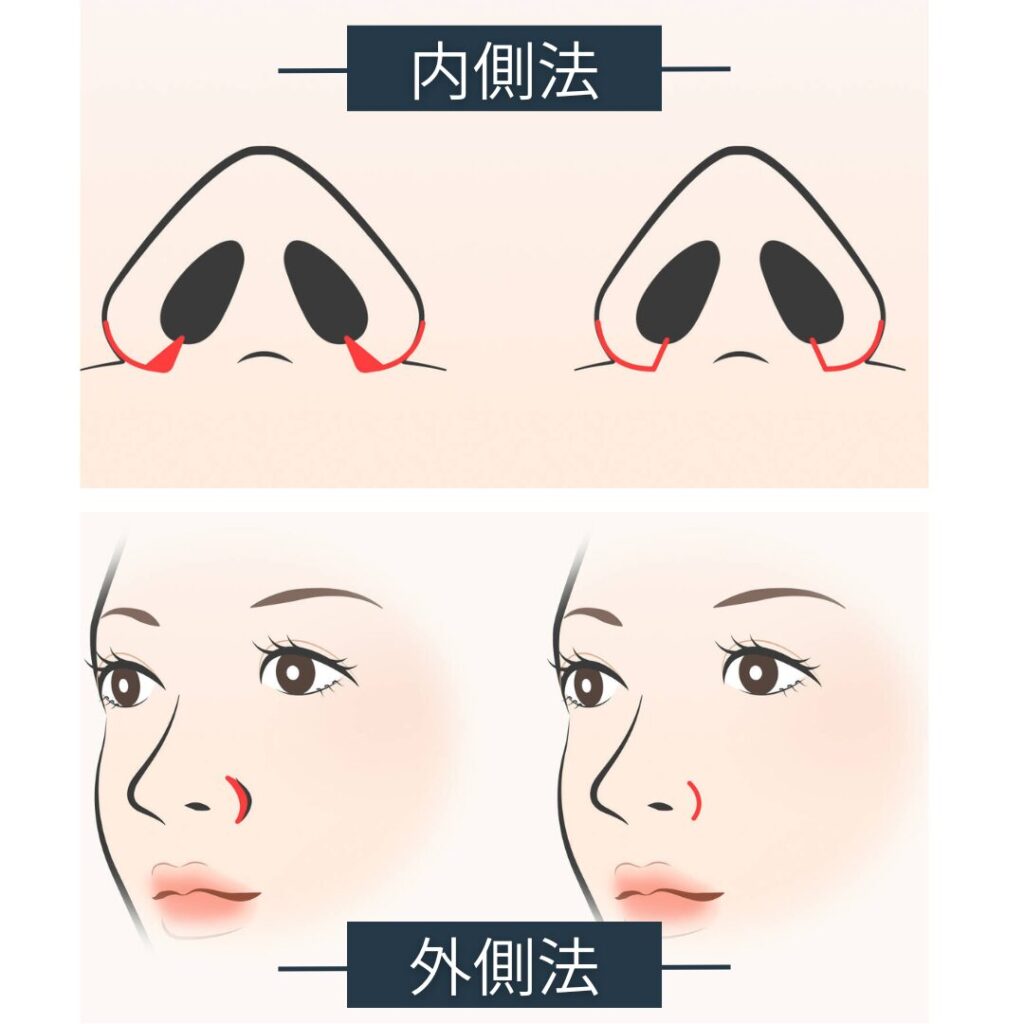
Nasal alar reduction is a procedure that removes tissue from the nasal floor inside the nostrils and skin on the outer sides to reduce width and fullness.
When manipulating the nasal floor, it can make the nostrils appear smaller and narrow their width.
Removing the outer skin can reduce the volume of the nostrils.
Design and technical skill are crucial in alar reduction. Without both, the risk of an unnatural result increases significantly. At LIVIN CLINIC, we prioritize designs that achieve a natural outcome.
We provide treatments that deliver noticeable results. We take into account your facial features and preferences to propose the most suitable design, so please feel free to consult with us.
▷Details on alar reduction (nose wing reduction) can be found here.
Key Points for Choosing a Clinic That Offers Treatments Suited to You
The outcome of procedures to thin the skin of the nose is significantly influenced by the skill of the physician.
Therefore, a doctor’s expertise and experience are crucial factors. To verify a doctor’s skill level, it is necessary to research their track record and reputation.
Check the clinic’s official website beforehand to see if they specialize in rhinoplasty and have experience with the specific procedure you want.
Furthermore, the counseling system is also important. Choose a clinic that will propose treatments suited to your ideal results and facial features.
Additionally, doctors who thoroughly explain the negative aspects such as risks and side effects can be considered highly trustworthy.
LIVIN CLINIC has extensive experience in rhinoplasty procedures.
Please check our official website for details. If you’re seeking a beautifully balanced nose, we invite you to schedule a consultation at LIVIN CLINIC.
Frequently Asked Questions from Those Who Want Thinner Skin on Their Nose
Finally, we’ll address some common questions from those considering procedures to thin the skin on the nose.
Q. Does pinching your nose make the skin thinner or your nose taller?
Pinching your nose may make it appear higher. However, the effect is often temporary and unlikely to provide a permanent solution. In fact, it carries the risk of damaging your skin or cartilage, so it’s not recommended.
Q. How much downtime and pain is involved with the procedure?
The downtime and pain associated with rhinoplasty vary depending on the procedure. For example, the downtime for tip rhinoplasty is typically around 1 to 2 weeks. After the procedure, once the anesthesia wears off, you may begin to feel a dull ache, but this usually subsides naturally within a few days.
Q. Is the effect semi-permanent after just one treatment?
The effects of rhinoplasty and alar reduction, when performed with incisions, can be considered semi-permanent. For non-incisional thread-lift procedures, results may vary by individual, but there is a possibility they may revert to their original state after about a year.
Let’s address your nose concerns with cosmetic procedures
We explained the causes of thick-looking skin on the nose and how to care for it.
“I feel like the skin on my nose has thickened,” “My bulbous nose is terrible”—these are common nasal complexes. Many people struggle with trying self-care methods like nose massage, only to find “results are slow to appear.”
Before the thickness of your nose worsens from continuing massages that thin the nasal skin, please consider adding cosmetic medical treatments to your options.
At LIVIN CLINIC, we take ample time for design consultations to propose treatments that harmonize your desired look with your natural facial features. If you seek a natural and beautiful result, please consult with LIVIN CLINIC.
Nostril Reduction (Alar Reduction): Procedure Details, Risks, and Side Effects
【Procedure Details】Nasal Wing
Reduction (Alar Reduction)
【Estimated Treatment
Duration and Sessions】Typically 1 session ※May
vary depending on individual condition.
【Procedure
Time】Approximately
1 hour【Cost】¥330,000 to ¥495,000 ※This procedure is self-pay (not covered by insurance).
【Face Washing, Bathing】No nasal
cast is applied. Face washing is possible starting the next day.
【Makeup】 Sutures are removed after one week
. Makeup may be applied starting the day after suture removal. 【Risks & Side Effects
(Possible Occurrences)】
Infection, wound dehiscence, impaired blood flow, swelling, bruising, nosebleeds, nasal congestion, columellar scarring, decreased sensation in the nasal tip or earlobes, nasal tilt, inability to elevate the nasal tip, asymmetry in nasal shape, hardening of the nasal tip, sensation of a rounded nasal tip.
▼Recommended articles for you after reading this piece
Nostril Reduction: Solve Your Nose Concerns. Detailed Explanation from Procedure Types to Downtime
For those who want a straighter nose bridge. The Complete Guide to Achieving Your Ideal Profile
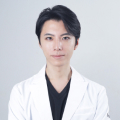
Supervisor of this article
Director Yoshiaki Shingyochi
SHINGYOCHI Yoshiaki
Director of LIVIN CLINIC and a specialist in plastic and cosmetic surgery. After graduating from Juntendo University School of Medicine, he gained extensive experience as a department head and vice director before assuming his current position in 2025. He specializes in nose and eye area procedures, breast augmentation, and other surgeries, earning the trust of patients both domestically and internationally. Guided by the belief of “maximizing each patient's unique beauty,” he provides high-quality treatment through advanced techniques and meticulous procedures. Director of LIVIN CLINIC, Board-Certified Plastic Surgeon, Board-Certified Aesthetic Surgeon (JSAPS), Doctor of Medical Science, Adjunct Assistant Professor, Department of Plastic Surgery, Juntendo University.
Share this article
-

Share on X
-

Share on Facebook
-

Share on LINE
-
リンクをコピーしました