
Can Asymmetrical Nostrils Be Corrected with Plastic Surgery? A Comprehensive Guide to Causes and Procedures
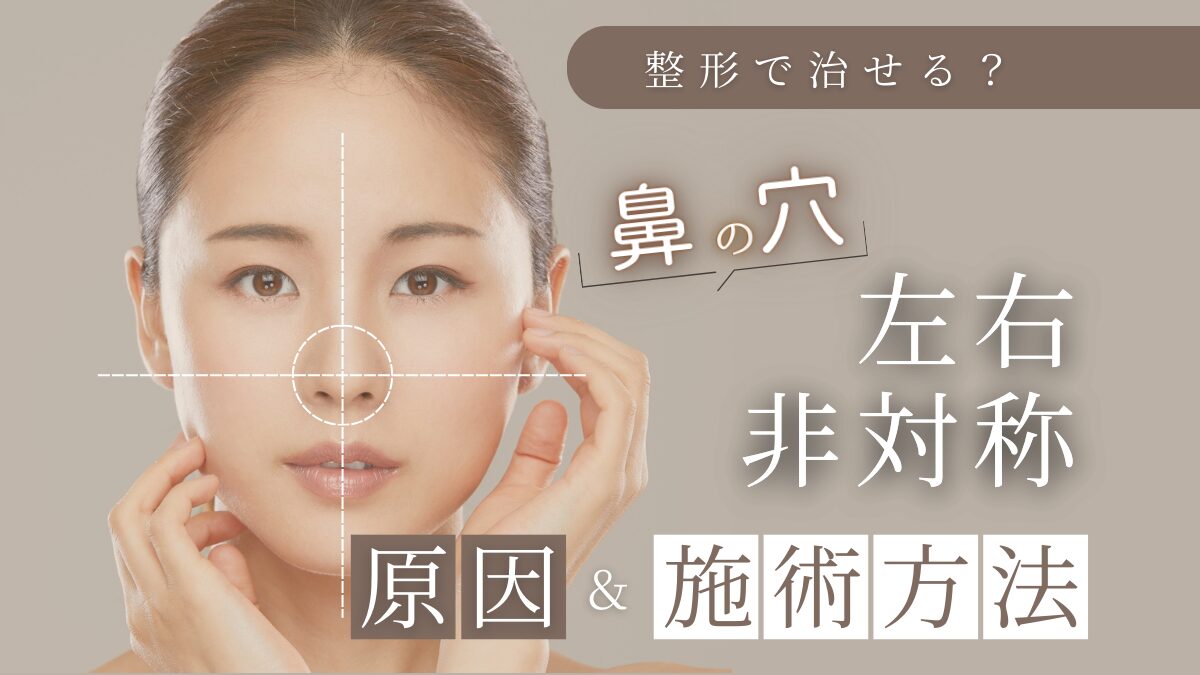
For those considering rhinoplasty due to asymmetrical nostrils: Congenital factors, lifestyle habits, and aging can sometimes cause noticeable differences in nostril size. This guide explains procedures suitable for those concerned about nostril asymmetry. LIVIN CLINIC also addresses key points for choosing a clinic and common questions. Read through to the end to resolve your doubts about nose surgery.
What causes asymmetrical nostrils? Can plastic surgery fix it?
First, I will explain the causes of asymmetry in the shape of the nostrils.
Congenital factors due to innate skeletal structure and cartilage
One cause of asymmetry in the size or shape of nostrils is the natural bone structure. Generally, it is rare for facial features to be perfectly symmetrical on both sides; slight differences exist, but in most cases, they are not noticeable and do not pose any health issues.
Distortions caused by acquired habits such as resting one’s chin on one’s hand or teeth grinding
Acquired factors include lifestyle habits. Habits like resting your chin on your hand or teeth grinding can affect the shape of your nose and alter the appearance of the nostrils. Additionally, a broken nose can also cause asymmetry.
Changes in skin and fat due to aging
As we age and our skin and fat begin to sag, it’s not uncommon to become concerned about asymmetry in the nostrils. Slight differences between the sides that were barely noticeable in youth can become more pronounced due to drooping skin and fat. If you find yourself noticing more than before that “the nostrils are different sizes,” aging is likely the cause.
Asymmetry due to a deviated nasal septum
Asymmetry in the nostrils can sometimes be caused by a deviated nasal septum, the cartilage and bone wall dividing the left and right nasal cavities. When this septum is crooked, it can cause the entire nose to appear crooked, a condition known as a crooked nose. This often results in differences in the shape or size of the nostrils, such as one nostril appearing narrower and the other wider.
How to fix asymmetrical nostrils? The limits of self-care and the option of plastic surgery
Next, let’s look at self-care methods and their effects.
What You Can Do with a Nose Massage
Self-massage can sometimes help correct asymmetry in the nostrils. Relieving puffiness and muscle tension around the nostrils can temporarily make the nose appear more defined and help straighten the bridge. Gently massaging the muscles beside the nostrils and lightly massaging along the bridge is an effective method.
However, applying excessive force may damage the skin or muscles. It is also important to continue daily without overexertion.
Why Self-Care Struggles to Address Root Causes
When aiming to even out the size and shape of your nostrils, self-care methods like massage and facial muscle exercises can help balance your overall facial appearance to some extent. However, asymmetry caused by differences in cartilage or bone structure cannot be resolved through self-care alone. Self-directed care offers only temporary effects, and the drawback is that results revert to their original state once you stop continuing the routine.
To fundamentally correct asymmetry and achieve lasting results, you should consider medical approaches such as cosmetic surgery to reshape the nostrils.
Top 5 Cosmetic Procedures for Asymmetrical Nostrils
Now, let’s look at the cosmetic procedures that can be considered when you have concerns about the shape of your nostrils.
Nostril Reduction (Nostril Reduction Surgery) to Refine the Width of the Nostrils Themselves
Nasal alar reduction, also known as alar reduction, is a procedure that tightens the appearance of flared nostrils and improves the overall balance of the nose. By partially removing skin from the inner or outer sides of the nostrils, it creates a more refined, streamlined appearance.
This technique features incisions and suturing designed to minimize scar visibility, resulting in a more natural-looking outcome. Additionally, designs can be customized to suit each individual’s nasal structure. However, as this is a surgical procedure, swelling and downtime may occur, and it is important to understand that postoperative recovery varies from person to person.
For more information about LIVIN CLINIC’s alar base reduction (nose wing reduction), please see here.
▷Nostril Reduction (Alar Reduction)
Septoplasty to adjust the direction and height of the nasal tip
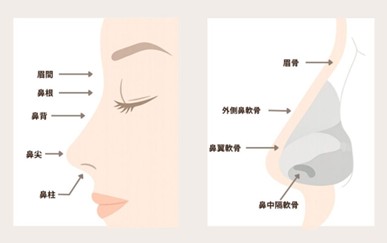
Septoplasty is a procedure that reshapes the nasal septal cartilage located in the center of the nose. By grafting ear cartilage or rib cartilage onto the septal cartilage to reinforce it, the height and angle of the nasal tip can be altered. This creates dimensionality at the center of the face, aiming for a natural and sharp nasal bridge. It can also adjust the appearance of the nostrils and is suitable for improving bulbous or pig-like noses.
Additionally, in some cases, this procedure is performed in conjunction with nasal septum correction (septal cartilage correction). By simultaneously correcting the deviation of the nasal septum, the tilt of the nasal bridge and asymmetry between the nostrils become less noticeable, aiming for a result closer to bilateral symmetry.
At LIVIN CLINIC, we pursue stable results with minimal relapse using our unique fixation method. Surgery takes approximately 3 to 5 hours under intravenous or general anesthesia. Please note that risks include swelling, bruising, nasal columella scarring, sensory changes, blood flow impairment, and infection. These will be confirmed during your consultation.
For more information about LIVIN CLINIC’s nasal septum extension surgery, please see here.
Rhinoplasty targeting bulbous noses or low nasal tips
Nose tip reshaping is a procedure designed to achieve a slender, elevated nasal tip. By refining the alar cartilage or grafting auricular cartilage, it addresses concerns such as bulbous, pig-like, or witch-like noses, helping to create a more refined nasal tip. Additionally, the change in the tip can make the nostrils appear smaller.
The Columellar Strut Technique used at LIVIN CLINIC is a surgical method that reinforces the nasal columella using transplanted cartilage. This results in a beautiful nose that is less likely to revert over time. Note that incisions will be made inside the nostrils and on part of the columella, but these will gradually become less noticeable. Please wear a cast for fixation for 5 to 7 days after surgery. During this period, refrain from washing your face.
For more information about LIVIN CLINIC’s nasal tip and nasal bridge surgery, please see here.
If the cause is a deviated nasal bridge, “nasal osteotomy and narrowing procedure”
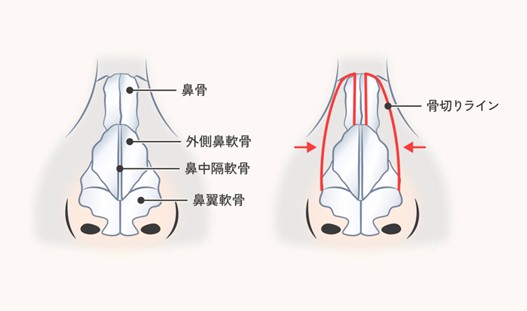
Nasal bone osteotomy and narrowing is a procedure that corrects the width and curvature of the nasal bridge at the skeletal level. By using an ultrasonic bone shaver with care to avoid affecting surrounding soft tissue, only the bone can be removed. Individuals with crooked or wide noses can achieve a natural, straight nasal bridge while minimizing swelling and bruising.
The surgery takes about one hour and is relatively short. Since intravenous anesthesia or general anesthesia is used, there is essentially no pain. As potential risks, understand that swelling, nosebleeds, nasal congestion, and decreased sensation may occur.
For more information about LIVIN CLINIC’s nasal bone osteotomy and narrowing procedure, please see here.
▷Nasal Bone Osteotomy with Width Reduction
“Nasal Bridge Reconstruction” to Reduce Nasolabial Folds
Nasal alar rim reconstruction is a procedure that rebuilds the raised skin at the entrance of the nostrils, which is lost during alar base reduction or philtrum shortening. A well-defined alar rim creates a more balanced nasal appearance and contributes to a more defined facial profile. It is also an effective method to alter the impression when the absence of an alar rim makes the nostrils appear large.
Reconstructing the nasal ridge will restore balance to the central area, creating a natural, three-dimensional expression from the bridge of the nose to the mouth. Potential risks of nasal ridge reconstruction include pigmentation changes at the surgical site, bruising, nasal tightness, and raised scar tissue.
For more information about LIVIN CLINIC’s embankment reconstruction, please see here.
▷Embankment Reconstruction
Key Points for Successful Nose Surgery to Correct Asymmetry Between Nostrils
Here are some important points to keep in mind when considering rhinoplasty.
Understand the precautions and risks
To avoid regret, it’s important to understand the precautions and risks involved. After the procedure, you must be careful about how you spend your time—avoid blowing your nose forcefully and refrain from sleeping on your stomach. Be especially mindful that intense sports involving impact to the nose may be restricted in some cases.
Aftercare is crucial for the final results of rhinoplasty. Follow your doctor’s instructions and rest during your recovery period.
Identifying Trustworthy Clinics and Doctors
Nose surgery is a procedure requiring high skill. Therefore, choosing the right clinic and surgeon is key to achieving your ideal nose. Before undergoing nose surgery, be sure to check the following points.
● Is the consultation thorough
? ● Do
they clearly
explain downtime and risks? ● Do they provide guidance on post-surgery care? ●
Is the surgeon
skilled in rhinoplasty? ● Do they have extensive experience in nose surgery? ● Are the fees transparent
? ● Is the aftercare support thorough
? ● Do they offer personalized recommendations?
If the right choice isn’t made, rhinoplasty can disrupt facial balance or leave you feeling uncomfortable. Be sure to check the before-and-after photos and reviews on the plastic surgery clinic’s website before scheduling a consultation.
Please see the LIVIN CLINIC appointment page here.
Q&A on Rhinoplasty Addressing Asymmetry in the Nostrils
Finally, we’ve compiled some common questions about nose procedures.
Q. Is it normal to have a difference in the size of your nostrils?
A. It’s normal for nostrils to have different shapes. Since human faces are not symmetrical, differences between the left and right sides occur in facial features, including the nose.
Q. How much pain is involved in the procedure? Is anesthesia used?
A. Since anesthesia is used during rhinoplasty, you will feel almost no pain. At LIVIN CLINIC, local anesthesia is included in the surgery fee. If you are concerned about pain, please consult with us, as we also offer nitrous oxide anesthesia or intravenous anesthesia as needed.
Q. Is insurance coverage available for cosmetic surgery to correct asymmetry in the nostrils?
A. Cosmetic surgery is not covered by insurance and is considered elective treatment. All costs associated with the procedure are the patient’s responsibility.
Don’t struggle alone—consult a specialist and achieve your ideal nose.
For noses with asymmetry between the left and right sides, massage techniques can be attempted. However, results will revert without consistent application, so consider cosmetic surgery if you wish to fundamentally alter the appearance. Use the clinic selection tips provided to achieve your ideal nose.
▼Recommended articles for you after reading this piece
Nostril Reduction: Solve Your Nose Concerns. Detailed Explanation from Procedure Types to Downtime
Dike Reconstruction (Postoperative 1 Week, Immediate Post-Suture Removal Progress)
【Procedure Details】Nasal Wing
Reduction (Alar Reduction)
【Estimated Treatment Duration and
Sessions】Typically 1 session ※May
vary depending on individual condition.
【Procedure
Time】Approximately
1 hour【Cost】¥330,000~¥495,000 ※This procedure is self-pay (not covered by insurance).
【Face Washing,
Bathing】No nasal cast is applied. Face washing is possible starting the next day.
【Makeup】 Sutures are removed after one week
. Makeup may be applied starting the day after suture removal. 【Risks & Side Effects
(Possible Occurrences)】
Infection, wound dehiscence, impaired blood flow, swelling, bruising, nosebleeds, nasal congestion, columellar scarring, decreased sensation in the nasal tip or earlobes, nasal tilt, inability to elevate the nasal tip, asymmetry in nasal shape, hardening of the nasal tip, sensation of a rounded nasal tip.
【Procedure Details】Nasal
Septum Extension 【Estimated
Duration
and Number of Sessions】Typically 1 session ※May
vary depending on individual condition.
【Procedure Time】Approximately
3 to 5 hours
【Cost】¥660,000 to ¥880,000 ※This procedure is self-pay (not covered by insurance).
【Face Washing and Bathing】Face washing is not possible for 5 to 7 days
post-surgery due to nasal plaster fixation. Showering from the neck down is permitted.
【Makeup】Makeup is permitted starting the day after the cast is removed and
sutures are taken out.
【Risks & Side Effects (Possible Occurrences)
】Swelling, bruising, nosebleeds, nasal congestion, columellar scarring, decreased sensation in the nasal tip or ears, nasal tilt, inability to elevate the nasal tip, asymmetry in nasal shape, hardening of the nasal tip, columellar scarring, rounded sensation in the nasal tip, infection, wound dehiscence, circulatory impairment.
【Procedure】Nasal
Tip
Reshaping
【Estimated Duration and Sessions】Typically 1 session ※May vary
depending on individual condition.
【Procedure Time】Approximately
2-3 hours
【Cost】¥385,000 ※This procedure is self-pay (not covered by insurance).
【Face Washing, Bathing】Face washing is not possible for 5-7 days
post-procedure due to nasal plaster fixation. Showering from the neck down is permitted.
【Makeup】Sutures are removed when
the cast is taken off. Makeup can be applied starting the day after suture removal.
【Risks and Side Effects (Possible Occurrences)】Risks and Side
Effects (Possible Occurrences): Infection, wound dehiscence, blood flow impairment, swelling, bruising, nosebleeds, nasal congestion, columellar scarring, decreased sensation in the nasal tip or earlobes, nasal tilt, inability to elevate the nasal tip, asymmetry in nasal shape, hardening of the nasal tip, sensation of a rounded nasal tip.
【Procedure Details】Nasal Bone
Osteotomy
and Width Reduction【Estimated Duration and Number of
Sessions】Typically 1 session ※May
vary depending on individual condition.
【Procedure
Time】Approximately
1 hour【Cost】¥550,000 ※This procedure is self-pay (not covered by insurance).
【Face Washing and Bathing】Face washing is not possible for 7
days post-surgery due to nasal plaster fixation. Showering from the neck down is permitted. Plaster fixation should be maintained as much as possible for up to 3 weeks post-surgery.
【Makeup】Makeup is permitted starting the day after the cast is removed
and stitches are taken out
.【Risks and Side Effects (Possible
Occurrences)】Infection, wound dehiscence, impaired blood flow, swelling, bruising, nosebleeds, nasal congestion, scarring on the columella, decreased sensation in the nasal tip or ears, nasal tilt, inability to elevate the nasal tip, asymmetry in nasal shape, hardening of the nasal tip, sensation of a rounded nasal tip.
【Procedure Details】Nasal
Alar
Base Reconstruction【Estimated Duration and Number of
Sessions】Typically 1 session ※May vary depending on individual condition.
【Procedure
Time】Approximately
1
hour【Cost】¥550,000 ※This procedure is self-pay (not covered by insurance).
【Face Washing, Bathing】Permitted starting the next day
.
【Makeup】 Sutures are
removed 1-2 weeks later. Makeup is possible from the day of the procedure.
【Risks & Side Effects (Possible Occurrences)】
Swelling • Bruising • Tightness in the nostrils • Infection • Hematoma • Wound separation • Scar elevation, indentation, or hyperpigmentation
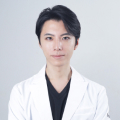
Supervisor of this article
Director Yoshiaki Shingyochi
Director of LIVIN CLINIC and a specialist in plastic and cosmetic surgery. After graduating from Juntendo University School of Medicine, he gained extensive experience as a department head and vice director before assuming his current position in 2025. He specializes in nose and eye area procedures, breast augmentation, and other surgeries, earning the trust of patients both domestically and internationally. Guided by the belief of “maximizing each patient's unique beauty,” he provides high-quality treatment through advanced techniques and meticulous procedures. Director of LIVIN CLINIC, Board-Certified Plastic Surgeon, Board-Certified Aesthetic Surgeon (JSAPS), Doctor of Medical Science, Adjunct Assistant Professor, Department of Plastic Surgery, Juntendo University.
Share this article
-

Share on X
-

Share on Facebook
-

Share on LINE
-
リンクをコピーしました